

Expert Advice

Low-Energy Workouts for Thyroid Health: Chair Yoga
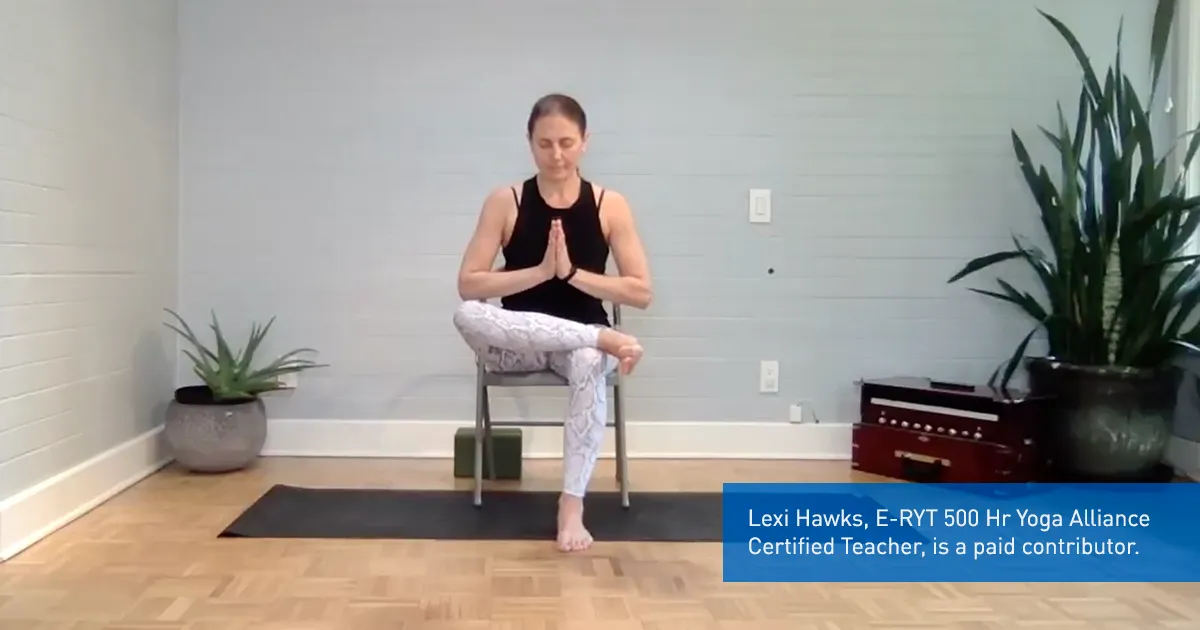

Acella Pharmaceuticals is partnering with Lexi Hawks, an E-RYT 500 Hr Yoga Alliance certified teacher, to bring greater awareness to the importance of thyroid care and education. This post is sponsored by Acella Pharmaceuticals.
Disclaimer: The information provided is for educational purposes only and does not substitute for professional medical advice. Consult a medical professional or health care provider if you believe you need medical treatment and before beginning any exercise, fitness, diet or nutrition routine. Acella Pharmaceuticals does not endorse, promote or sponsor any products or brands mentioned in this article. The views expressed are those of the author.
How many times have you skipped exercising because you felt too tired or stressed? If you’re searching for low-energy workouts for thyroid health, you’re not alone. Fatigue may make even simple movement feel out of reach, especially for those managing hypothyroidism.
What if I told you there is a way to move your body even when you’re experiencing hypothyroidism fatigue and it can be done while sitting in your office chair? Sounds too good to be true, I know. Yet every week, I see people transform their relationship with exercise, energy, and their body through the welcoming practice of chair yoga.
Why Low-Energy Workouts Matter for Thyroid Health
Chair yoga provides a gentle, accessible way for people to stay active, especially those experiencing low energy or mobility limitations. This low-impact style of yoga is ideal for low-energy workouts for thyroid health by helping to improve flexibility, circulation, and strength – all without added strain on the body. Like all forms of yoga, this practice can ease stress and support overall physical and mental well-being, making its benefits achievable for everyone.
Surprisingly, you don’t have to run out and buy a lot of items for a chair yoga session. With a little creativity and resourcefulness, you can use common household items and still enjoy a successful yoga practice. You can even wear your everyday clothing!
Follow along for some introductory chair yoga movements you can do in the comfort of your own home or workspace. This chair yoga for hypothyroidism routine is designed to support energy, mobility, and relaxation without overwhelming the body. Below is a 30-minute chair yoga sequence to help establish a foundational practice that encourages grounded strength, increased energy, and mental stillness. Be sure to move slowly and allow your breath to guide each movement. If any pose causes discomfort, gently ease out of it or modify as needed. To begin, sit in a comfortable, upright position in a sturdy chair, with your feet on the floor and your spine long.
We will begin this practice with Deep Equal Breathing to help center and ground our attention.
Deep Equal Breathing
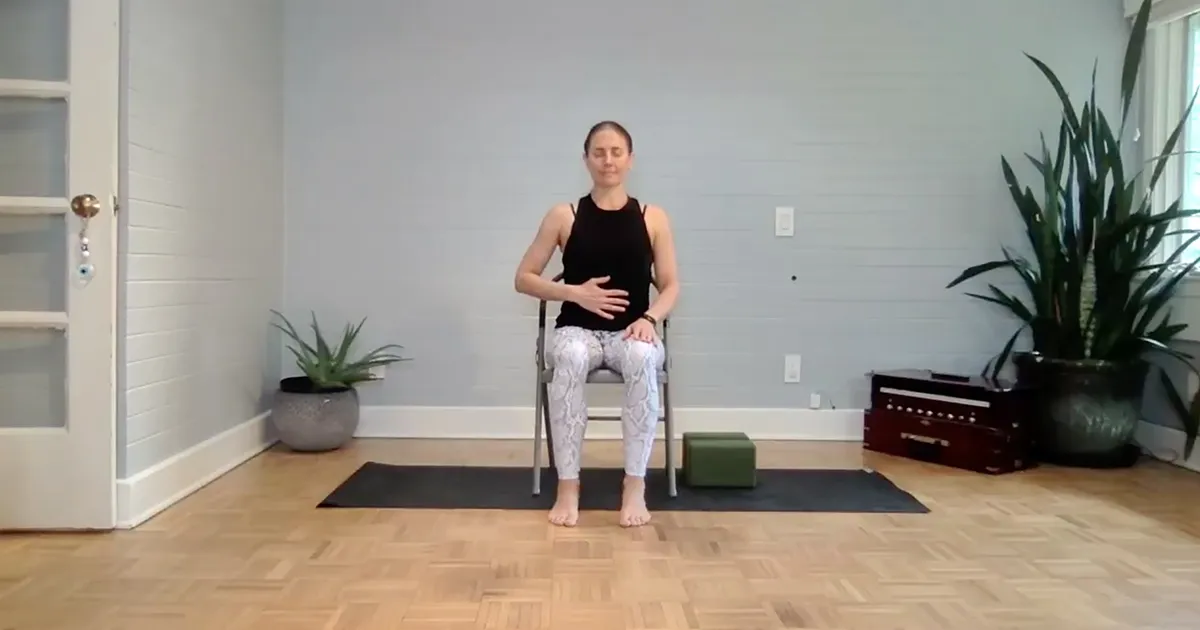
Widen the collarbones and gently wrap the outer shoulders back. This will broaden the chest and allow for optimal breathing.
Breathe in a diaphragmatic way where the belly expands outward with the inhale and contracts inward with the exhale. You may place one hand on the navel to feel this movement. Let the breath be as effortless as possible to avoid creating strain. Aim for an equal inhale and exhale with each breath cycle (three to five mental counts). Continue this breathing technique for at least seven full cycles. With each inhalation, feel fresh breath enter the body, giving it what it needs. With each exhalation, release what is no longer needed.
After completing your breathing practice, begin to bring gentle movement into the body while maintaining the steady rhythm of your breath. Practices like this are especially helpful as low-energy workouts, allowing you to gently re-engage the body while honoring natural energy levels.*
Mountain Pose and Extended Mountain Pose – Tadasana
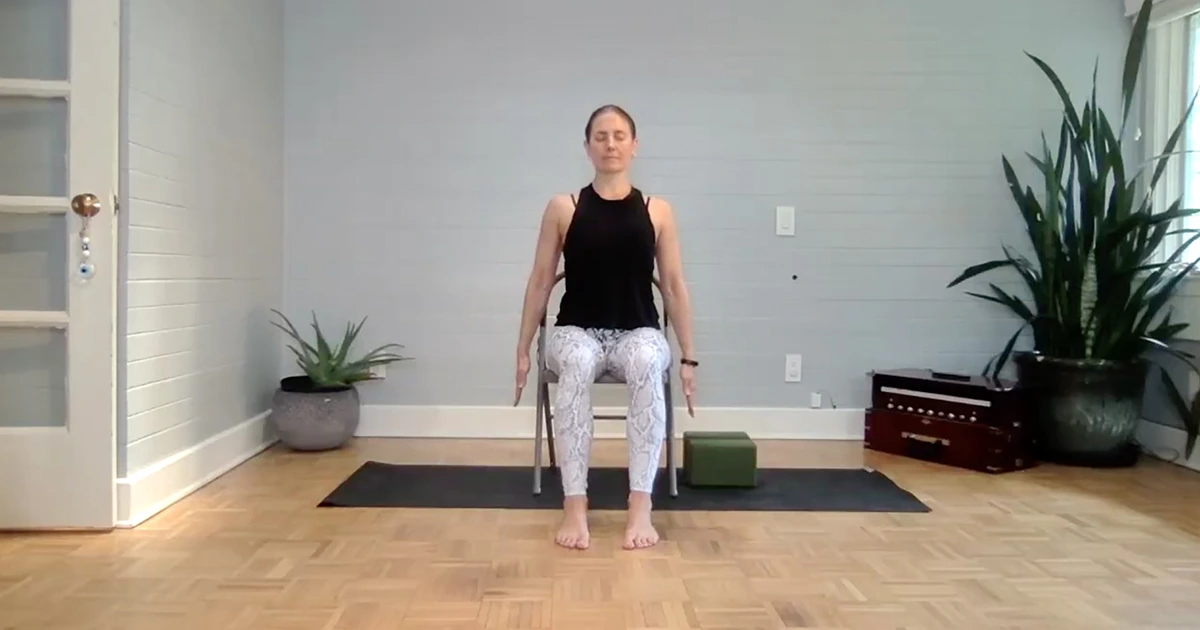
Sit toward the front edge of the chair with your feet flat on the floor and the legs in a comfortable parallel position. Keep the knees stacked over your ankles at about a 90-degree angle. Press the four corners of the feet into the ground and distribute the weight evenly between the balls and heels of the feet. Press down through the feet as if you are about to stand and imagine lifting energy from the ankles to the hips. Lift the sides of the body from the outer hips to the sides of the chest. Keep the spine long and the chest and upper back broad. Lengthen the back of the neck and keep the chin neutral. Focus the gaze straight ahead.
Arms Rise Overhead
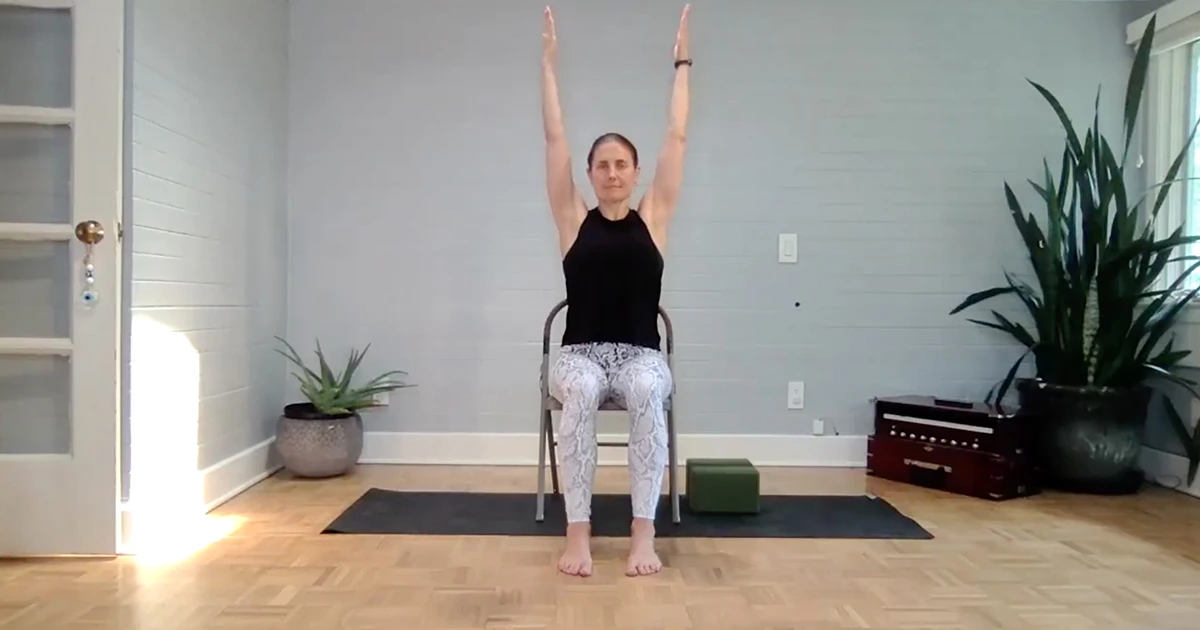
Stay in Mountain Pose. On an inhale, reach the arms overhead, either shoulder-distance apart with the palms facing each other or with them touching. Draw the gaze toward the thumbs and feel a subtle lift within the heart center. On an exhale, bring the arms back down while maintaining the length you have created in the body. Repeat two to five times. From this grounded seated position, we’ll begin to warm and mobilize the spine with a gentle flowing movement.
Cat and Cow Flow – Marjaryasana/Bitilasana
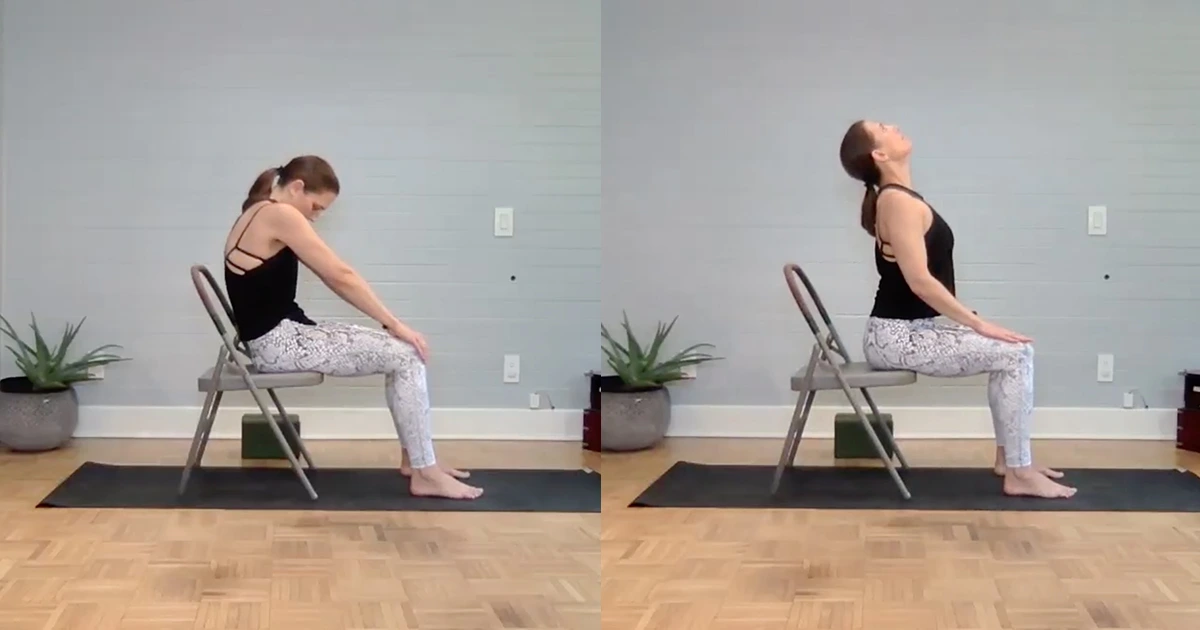
Sit toward the front edge of the chair with feet flat on the floor and hip-width apart. Keep the knees stacked over the ankles at about 90 degrees. Sit tall on your sit bones and place your hands on your thighs. Lengthen through the crown of the head and relax the shoulders down and back. On an inhale, tilt the pelvis forward and allow the belly to soften forward as you lift the chest, broaden the collarbones, and extend the spine. On the exhale, tuck the tailbone under and round the back while drawing the navel toward the spine. Let the shoulders move slightly forward and gently release the chin toward the chest.
Allow the breath to guide the movement. Each inhale moves you into Cow Pose, and each exhale moves you into Cat Pose. Repeat this flow 6 to 10 times, with slow, steady movement. Now that the spine and breath are moving together, we can begin to build a little more strength and stability in the legs, an important part of exercise for fatigue that supports endurance over time.*
Warrior II – Virabhadrasana II
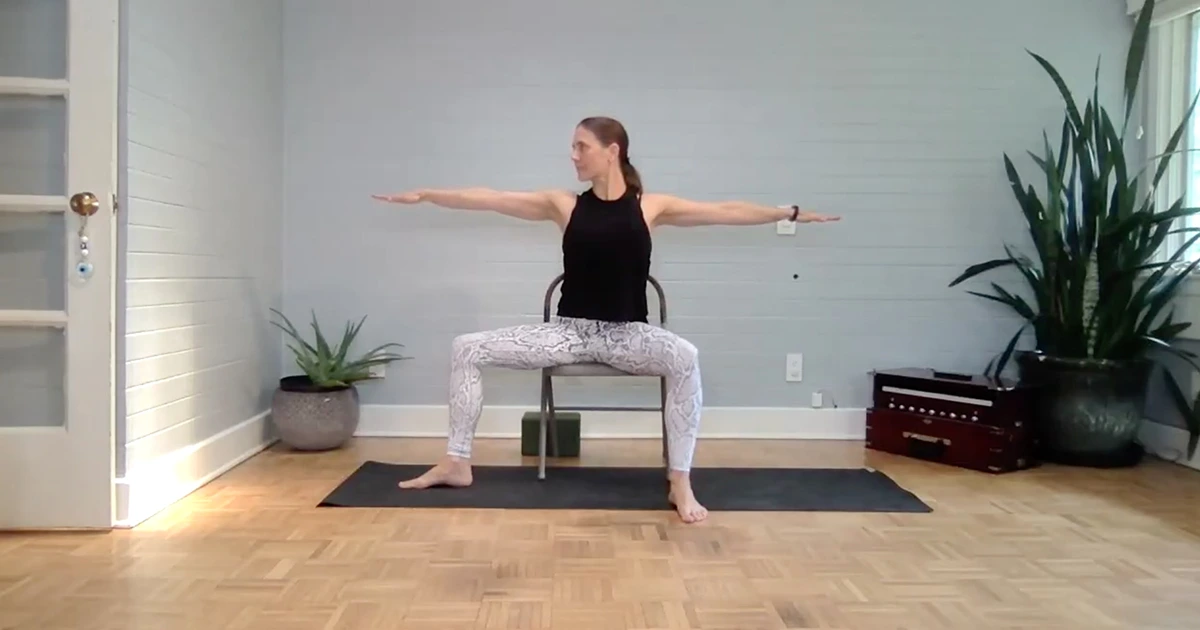
Begin in Mountain Pose in the chair.
Externally rotate the right hip, turning the leg out to the right while keeping the knee aligned over the ankle. The left leg should remain neutral but may step slightly to the left for comfort and stability. Press firmly into the feet and sit bones while keeping the torso centered between the legs. Extend both arms out to the sides in a wide horizontal reach. Gently shift the shoulder blades toward the back to support the lift of the arms. Turn the gaze toward the right hand and hold the pose for five breaths.
Repeat on the other side.
From the strength of Warrior II, we’ll add a gentle side stretch to create more space through the ribs and torso.
Reverse Warrior – Viparita Virabhadrasana
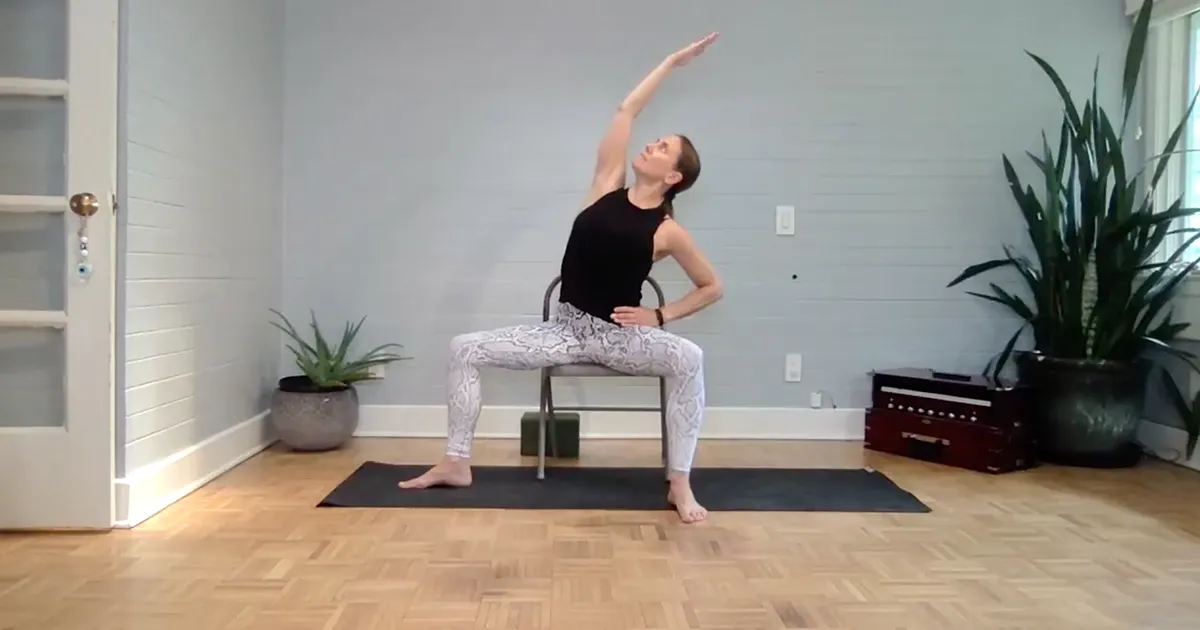
Begin in Warrior II on the right side.
Bend the left elbow and place the hand on the left hip for stability. With the right arm extended out to the side, flip the palm to face upward. On an inhale, reach the arm slightly forward. On the exhale, sweep the arm up and back in a long arc overhead. Feel the stretch along the right side of the torso. Hold for three to five breaths before returning to center and repeating on the other side.
Slowly return to center and bring the body back into a neutral seated position as we explore a wider stance and open the hips.
Yogic Squat with Arm & Foot Variations – Upavesasana
Externally rotate both hips so the legs open into a wide squat position while seated. On an inhale, open your arms into a “goal post” shape with the elbows bent at 90 degrees. Allow the chest to open and the gaze to lift toward the ceiling. On an exhale, draw the arms toward the center and bring the head down, sending the gaze toward the navel. Optionally, lift the heels on the inhale and press them back down on the exhale. Repeat for five to nine rounds.
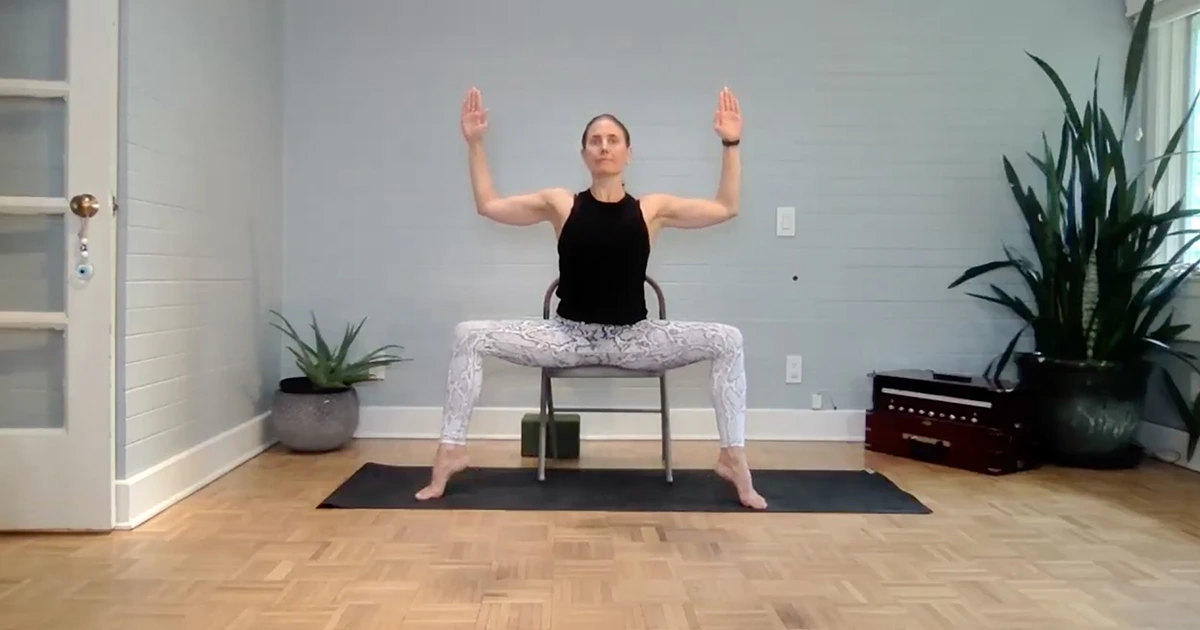
After activating the hips and legs, we can move into a deeper stretch for the outer hips, continuing this gentle workout for low energy that helps reduce stiffness and improve mobility.
Pigeon Stretch – Kapotasana
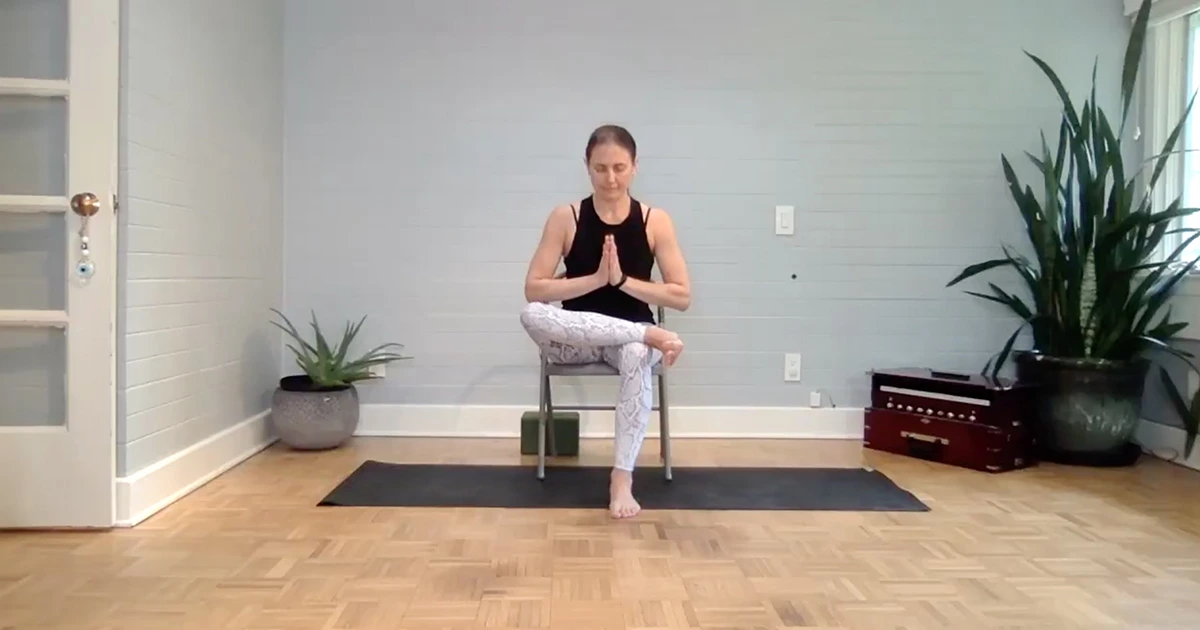
From Mountain Pose, place the outer right ankle on top of the lower left thigh, creating a figure-four shape. Keep both legs active and the pelvis level on the chair. If you already feel a stretch in the hip, remain upright. For a deeper stretch, bring the palms together at the chest and hinge forward from the hips while keeping the spine long. Hold for 12 breaths and visualize the exhales removing tension. Switch sides.
From this hip opening stretch, we’ll return to an upright position and gently open the front of the body and chest.
Supported Camel Pose – Salamba Ustrasana
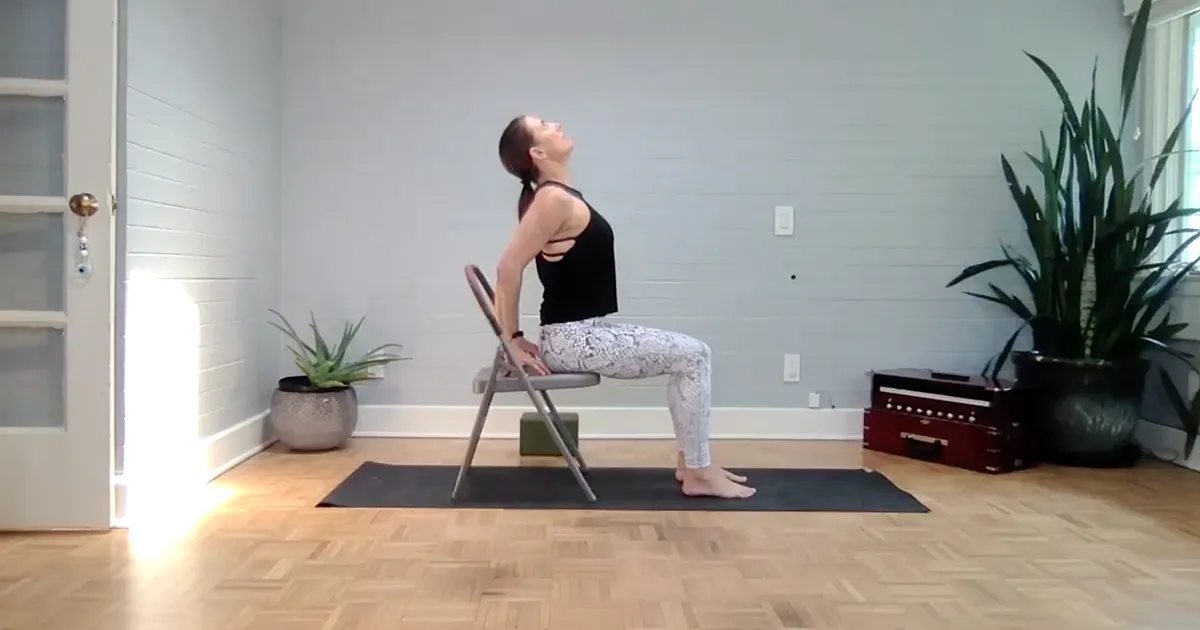
Sit toward the front edge of the chair with the feet hip-width apart. Place your hands toward the back of the chair in line with your shoulders. Ground the legs and lift the chest toward the ceiling while pressing the fingertips into the chair. Allow the gaze to gently lift. To come out of the pose, inhale and slowly return upright, letting the head rise last.
After expanding the chest and front body, a gentle twist helps rebalance the spine.
Seated Spinal Twist – Ardha Matsyendrasana
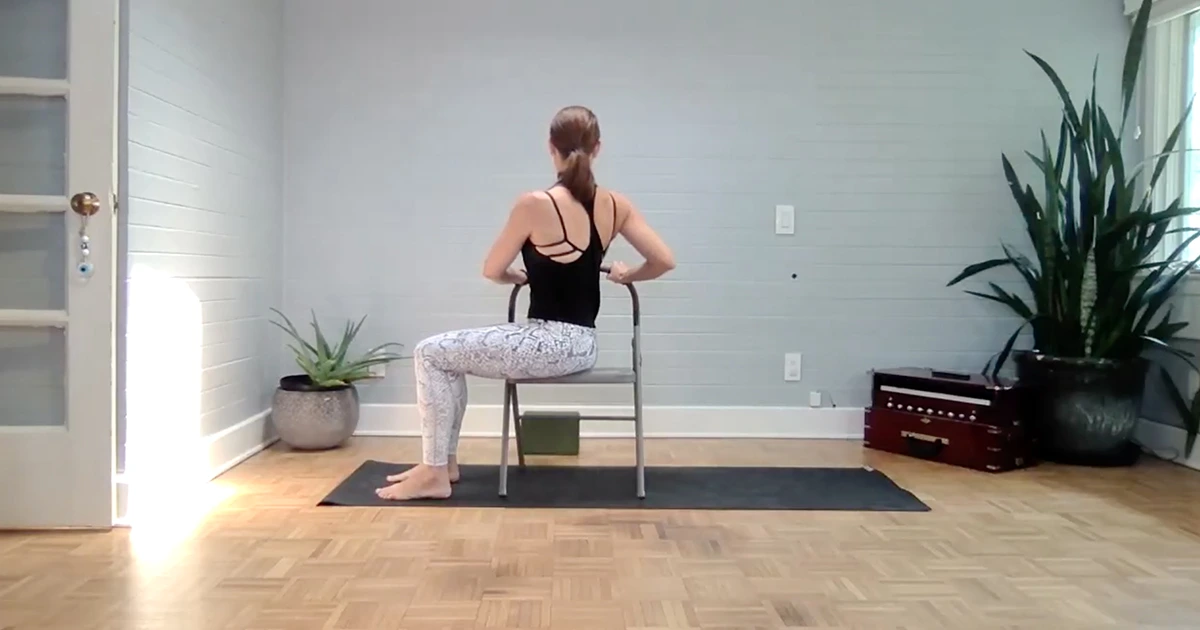
Turn to face the left side of the chair. Inhale and reach the arms overhead to lengthen the spine. Exhale and twist to the left, placing the hands on the back of the chair. With each inhale, lengthen the spine. With each exhale, gently deepen the twist. Hold for three to five breaths, then repeat on the other side.
From the twist, return to center and allow the body to soften into a calming forward fold.
Forward Fold – Uttanasana
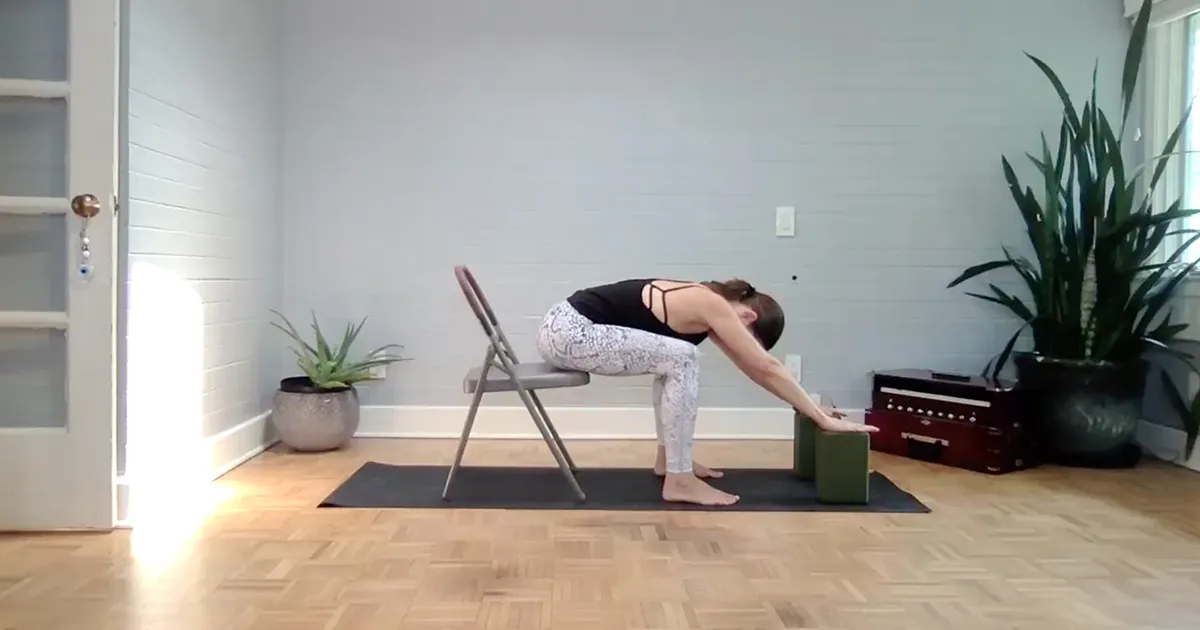
Bring the feet together or hip-distance apart.
Fold forward from the hips and place the hands on a wall, blocks, or the floor. Keep the legs active by lifting the muscles of the thighs upward. Inhale to lengthen the spine and slowly rise back up (optional hand support on the knees to rise).
Final Rest – Savasana
Let the breath return to its natural rhythm and rest quietly for at least five minutes.
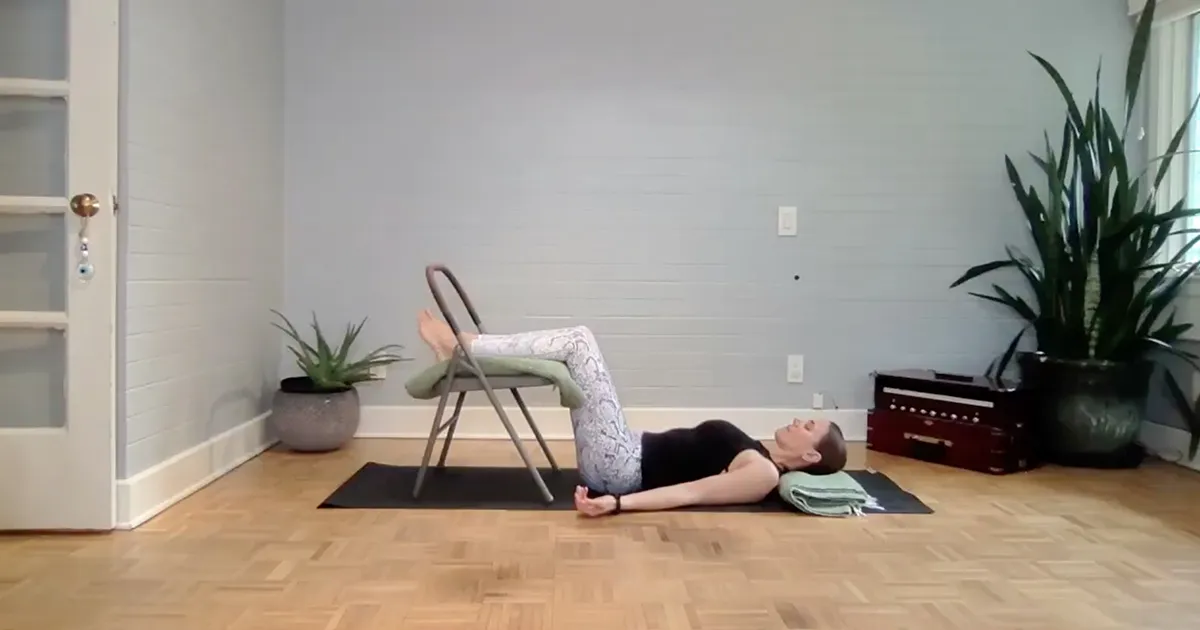
Chair yoga meets you exactly where you are.
On days when energy is low or stress feels high, this simple practice can help restore circulation, clarity, and calm within the body. By returning to these movements regularly, you may notice improved energy, flexibility, and a greater sense of balance in both body and mind. Even a few mindful minutes in your chair can become a meaningful way to reconnect with your breath, body, and overall well-being.
*Exercise should not replace medical treatment. Always take your thyroid medication exactly as prescribed by your healthcare provider to keep your hormone levels balanced
4175-v1.1
Note that DTE products, including NP Thyroid®, have not been reviewed by the FDA for safety or efficacy.
IMPORTANT RISK INFORMATION, INCLUDING BOXED WARNING & INDICATIONS
Important Risk Information
Drugs with thyroid hormone activity, alone or together with other therapeutic agents, have been used for the treatment of obesity. In euthyroid patients, doses within the range of daily hormonal requirements are ineffective for weight reduction. Larger doses may produce serious or even life-threatening manifestations of toxicity, particularly when given in association with sympathomimetic amines such as those used for their anorectic effects.
- NP Thyroid® is contraindicated in patients with uncorrected adrenal insufficiency, untreated thyrotoxicosis, and hypersensitivity to any component of the product.
- In the elderly and in patients with cardiovascular disease, NP Thyroid® should be used with greater caution than younger patients or those without cardiovascular disease.
- Use of NP Thyroid® in patients with diabetes mellitus or adrenal cortical insufficiency may worsen the intensity of their symptoms.
- The therapy of myxedema coma requires simultaneous administration of glucocorticoids.
- Concomitant use of NP Thyroid® with oral anticoagulants alters the sensitivity of oral anticoagulants. Prothrombin time should be closely monitored in thyroid-treated patients on oral anticoagulants.
- In infants, excessive doses of NP Thyroid® may produce craniosynostosis.
- Partial loss of hair may be experienced by children in the first few months of therapy but is usually transient.
- Adverse reactions associated with NP Thyroid® therapy are primarily those of hyperthyroidism due to therapeutic overdosage.
- Many drugs and some laboratory tests may alter the therapeutic response to NP Thyroid ®. In addition, thyroid hormones and thyroid status have varied effects on the pharmacokinetics and actions of other drugs. Administer at least 4 hours before or after drugs that are known to interfere with absorption. Evaluate the need for dose adjustments when regularly administering within one hour of certain foods that may affect absorption.
- NP Thyroid® should not be discontinued during pregnancy, and hypothyroidism diagnosed during pregnancy should be promptly treated.
Indications
NP Thyroid® (thyroid tablets, USP) is a prescription medicine that is used to treat a condition called hypothyroidism from any cause, except for cases of temporary hypothyroidism, which is usually associated with an inflammation of the thyroid (thyroiditis). It is meant to replace or supplement a hormone that is usually made by your thyroid gland.
NP Thyroid® is also used in the treatment and prevention of normal functioning thyroid goiters, such as thyroid nodules, Hashimoto’s thyroiditis, multinodular goiter, and in the management of thyroid cancer.
Revised
10/2023
You Are About To Leave This Website
By clicking continue, this link will take you to a website to which Alora Pharmaceuticals' Policies & Terms of Use do not apply. Alora and its subsidiaries do not control the content or accuracy of third-party websites and assume no responsibility for their use.
^Based on prescriptions filled, NP Thyroid® is the #1 Prescribed DTE in the United States. Source: IQVIA National Prescription Audit (NPA) data on file. Acella Pharmaceuticals, LLC.