

Expert Advice

Yoga Poses to Support Your Legs


Acella Pharmaceuticals is partnering with Lexi Hawks, an E-RYT 500 Hr Yoga Alliance Certified Teacher, to bring greater awareness to the importance of thyroid care and education. This post is sponsored by Acella Pharmaceuticals.
Disclaimer: The information provided is for educational purposes only and does not substitute for professional medical advice. Consult a medical professional or health care provider if you believe you need medical treatment and before beginning any exercise, fitness, diet or nutrition routine. Acella Pharmaceuticals does not endorse, promote or sponsor any products or brands mentioned in this article. The views expressed are those of the author.
People living with hypothyroidism may experience leg discomfort, fatigue, swelling, or poor circulation. For those looking for ways to support your physical body, a mindful yoga practice may help improve blood flow and increase leg strength.1,2
Many yoga postures create strength and flexibility in the body. The specific combination of engagement and stretching is known as eccentric stretching, which is performed by simultaneously contracting and lengthening a muscle. The benefits of this type of movement include stronger muscles, and improved bone strength, joint health, blood flow, and balance, all of which support better circulation and overall mobility.1,3 Try the following yoga exercises to support the legs and to engage them in eccentric stretching.
Pose 1: Mountain Pose with Toe Lifts and Calf Raises
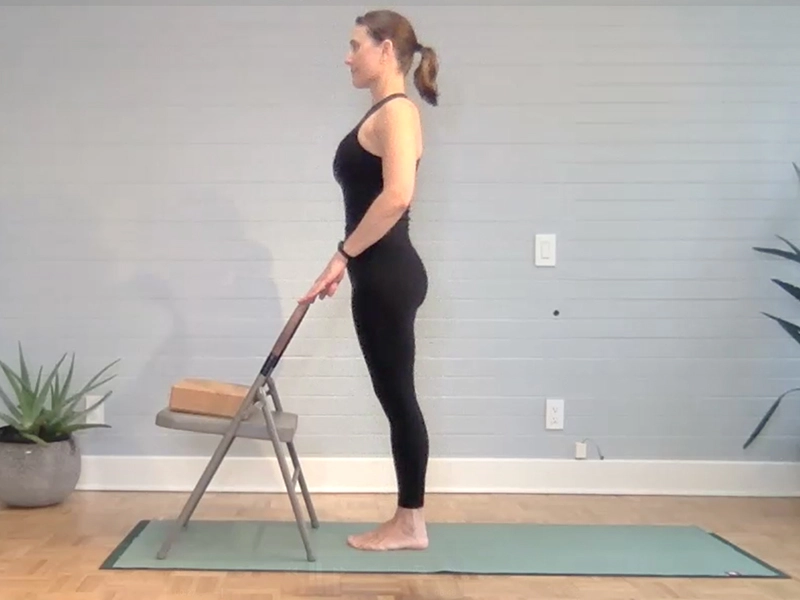
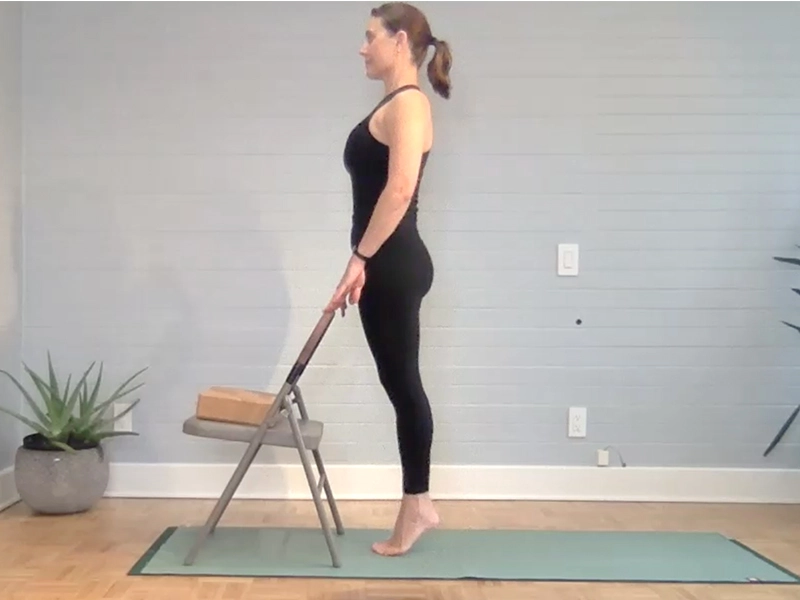
While standing, join your feet and legs. Connect all four corners of your feet to the ground. Distribute your weight evenly between the balls and heels of your feet. Press down through your feet and lift from your ankles to the hips. Lift the sides of your body from the outer hips to the sides of your chest. Keep your spine long and your chest and upper back equally broad. Lengthen the back of your neck while your chin stays neutral. Focus your gaze straight ahead. Your body should feel active and alert, and your muscles should feel firm.
If your balance feels unstable, face a wall and place both hands on it for support and stability. Maintaining mountain pose, lift the heels and balance on the balls of the feet. Continue to firm and pull up on the legs, creating resistance, then slowly lower your heels. Imagine you are pressing your heels down through wet sand. Repeat 10 times.
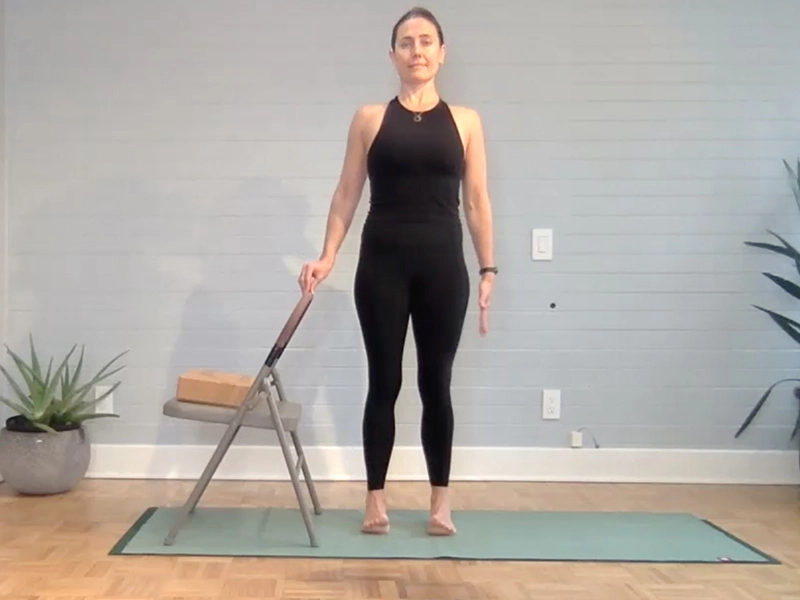
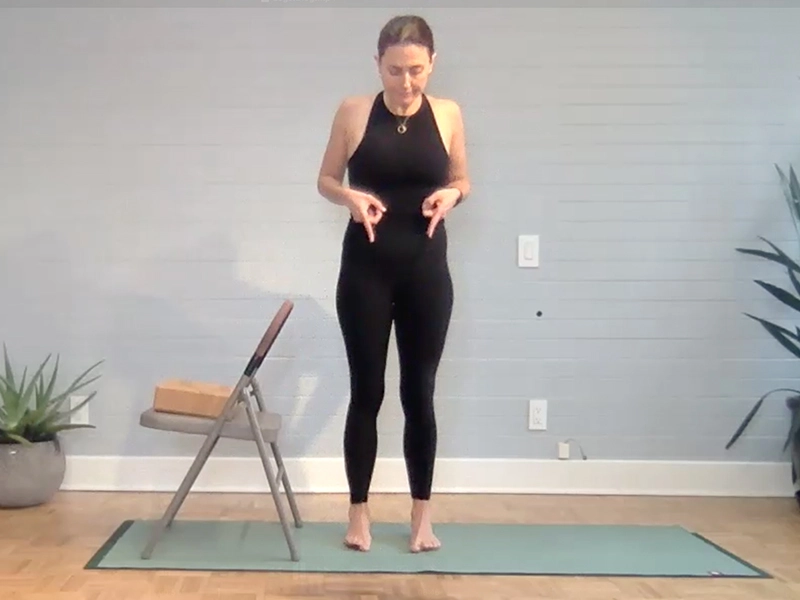
Next, keep the heels and the balls of the feet firmly rooted and lift all 10 toes. Spread the toes wide and long. Hold them up for three breaths and slowly lower them down while keeping the inner arches of the feet active and lifted. Repeat 10 times
Pose 2: Plank Pose with “Push Up” Motion
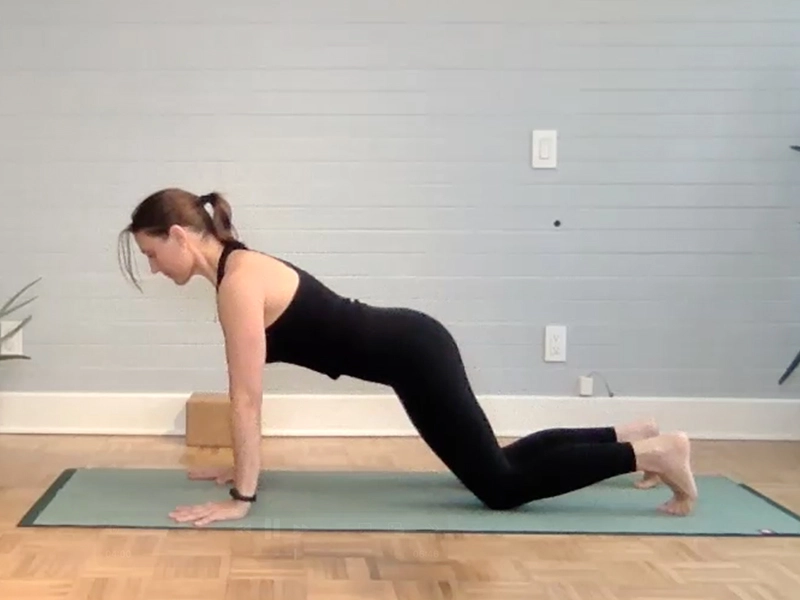
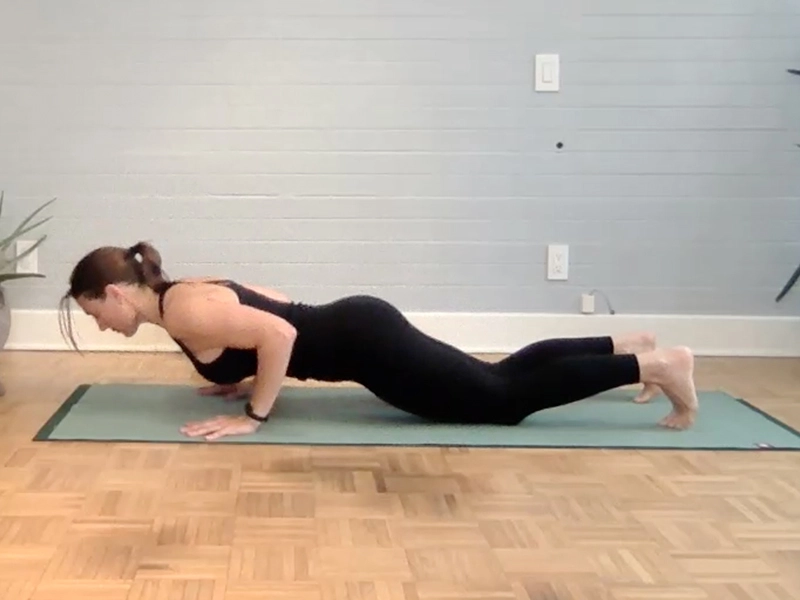
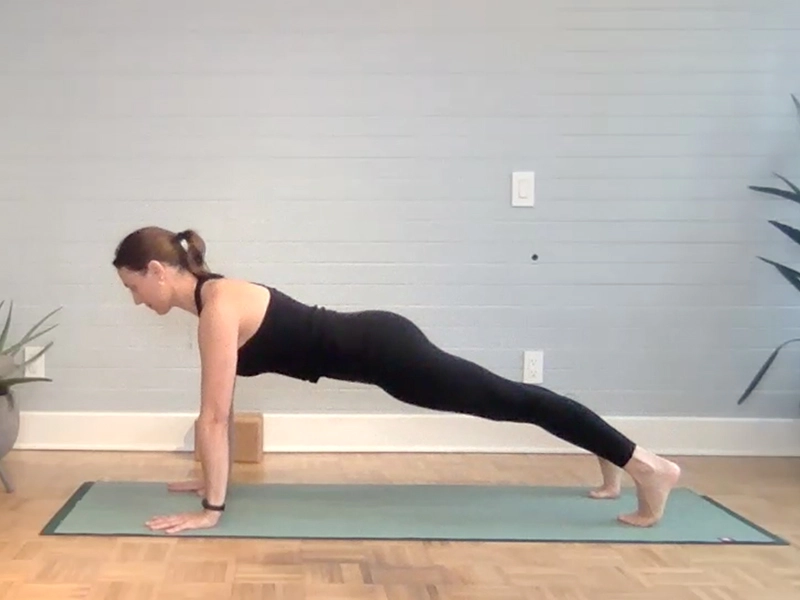
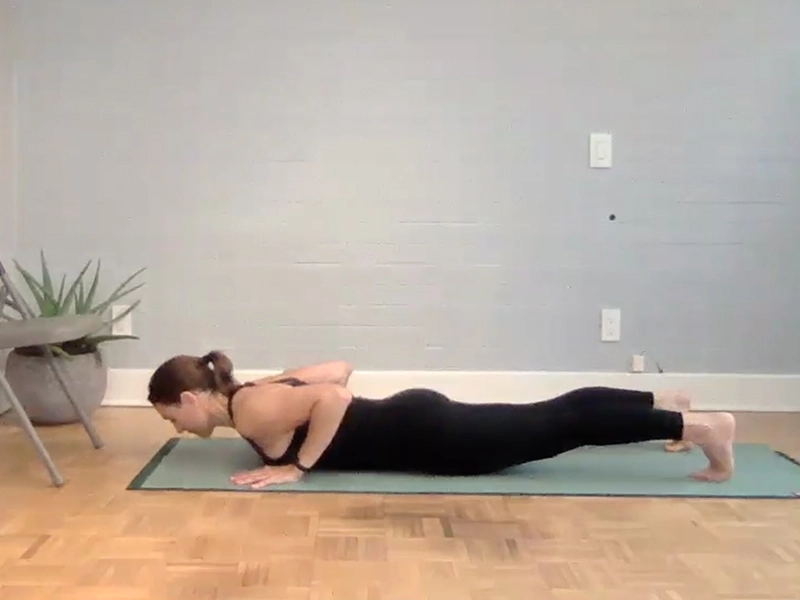
Come to a plank post (with the option to lower your knees for added core support). Your body should feel like it’s in Mountain Pose (see pose No. 1 above). Press both palms evenly and firmly into the ground. Align your shoulders over your wrists. Maintaining a firm and fully engaged body, slowly bend your elbows and lower your body to the floor for a count of 10. Your body will hover in a straight line over the ground (unless you are using the knee support option). Look forward and keep the back of your neck long. Once you are lying on the ground, take a few breaths and relax.
To rise, take the form of a plank against the floor; tuck all 10 toes, press the front of your leg to the back of your leg, bend your elbows, and place your palms next to your ribs. Inhale fully and, with an exhale, firm your body, engage your core, and press up slowly (you also have the option to keep your knees down for added core support and/or low back considerations). The rise might feel more demanding than lowering; if so, start with the count of five and work up to 10 counts.
Pose 3: Pyramid Pose at Wall or With a Chair
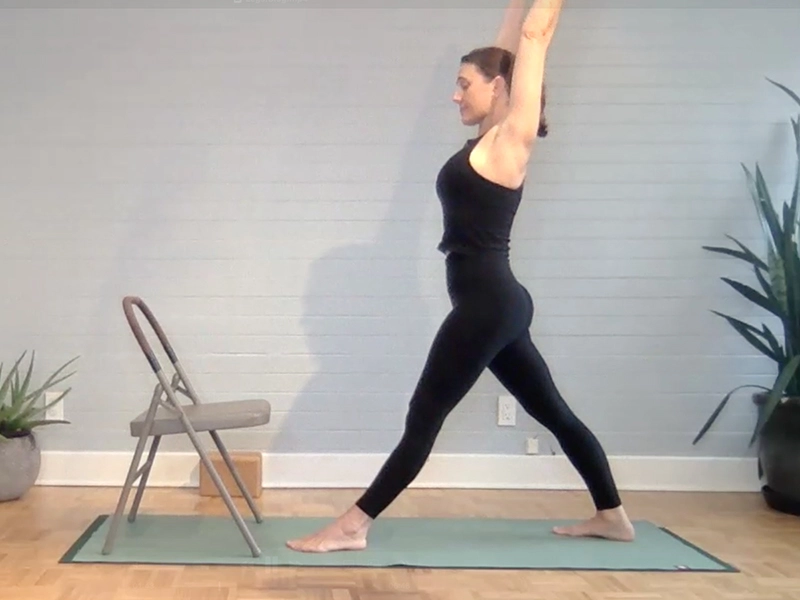
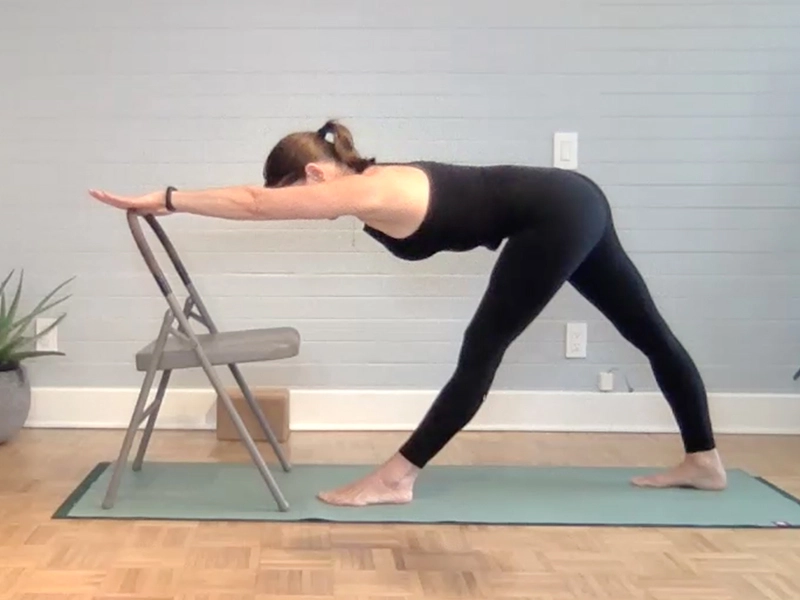
Start in Mountain Pose (see pose No. 1 above). Step your left foot back between 2.5 feet and 3.5 feet and ground it all the way down while your chest and hips face forward. Ensure the distance between your feet is suitable for feeling grounded and stable. If you are wobbly, try shortening the distance between your right and left foot and try widening your legs a few inches
As you press your feet firmly to the ground, bring energy up your legs and lengthen your spine. Reach the arms overhead to help further lengthen the torso. Keeping your body firm and fully engaged, bend at the top of your legs to slowly fold. Take five counts to fold, using your body engagement to provide resistance to the fold.
Bring your hands to a wall or a chair. Your arms will remain long and strong with your hands pressing the wall or gripping the side or back of a chair. Your spine and torso remain long (do not round the back). Keep your gaze looking forward. Take a long inhale to lengthen the sides of the body from the outer hips to the sides of the chest. In this version of the pose, you will not fold all the way to the front leg but instead prioritize the strength in the body and only fold halfway. To rise, firm your feet to the ground, lift the energy in your legs, and offer a gentle hug of your hips and outer pelvis to stabilize your foundation. With an inhale, either slowly "walk" your hands up the wall or place your hands on your hips and rise with resistance, as if lifting the torso through water. Switch legs and repeat.
Pose 4: Warrior Three with Leg Pulsing
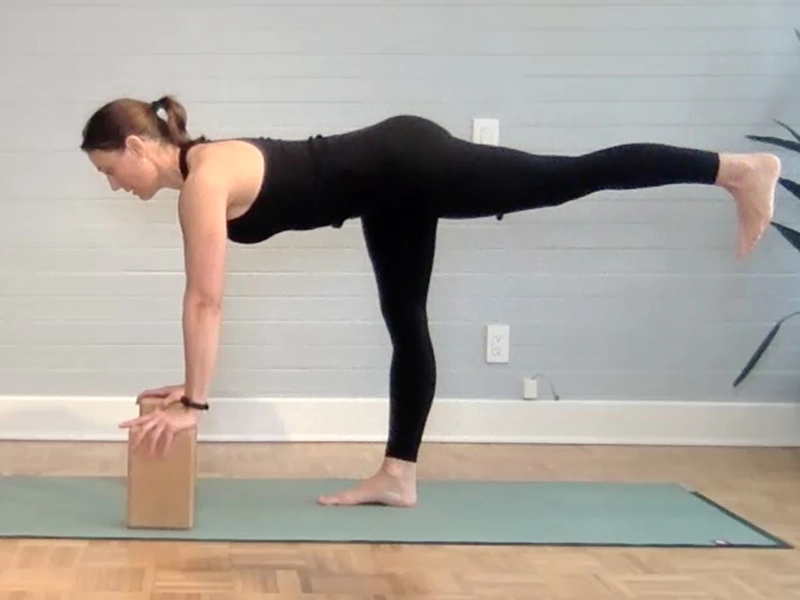
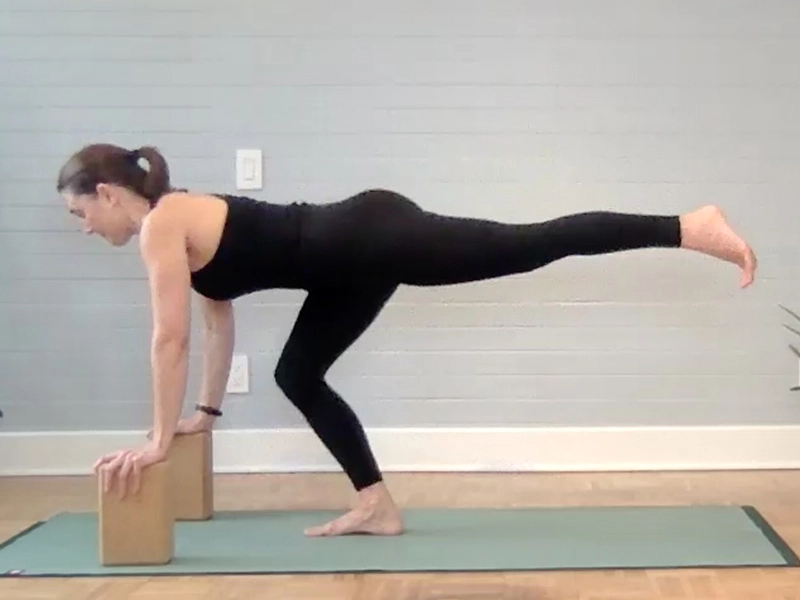
From Mountain Pose (see pose No. 1 above), place your left foot back about 2.5 feet to 3 feet, into a shallow crescent lunge. Reach your arms overhead and bend your right knee to lean your upper body forward. For support, place your hands on yoga blocks, keeping your arms straight and strong from your shoulders. Alternatively, you can perform this pose using a stable chair.
For a bigger challenge, place your hand on your hips or palms, pressing together at the center of the chest. Shift your weight to your right leg and lift your back leg, keeping it long and engaged. Your torso is parallel to the floor, and your legs should be as long as possible. To pulse the pose, bend your standing leg and slowly straighten it, resisting gravity. Perform the straightening motion slowly over five to 10 counts. The hamstrings in the back of your thigh will lengthen while staying engaged.
Repeat the pulsation five to 10 times. Inhale to raise your torso upright and place your lifted leg next to your standing leg, then return to mountain pose. Repeat on the other side.
Improvement Occurs with Regular Practice
These four yoga postures are a starting point, but meaningful change comes with consistency. By dedicating even a few mindful minutes each day, you give your body the chance to build strength, improve circulation, and move with greater ease over time. Namaste.
REFERENCES: 1. Karthiga J, Pal P, Sahoo J, Nanda N, Kavitha N, Pal GK. Effect of 12 Weeks Yoga Therapy on Heart Rate Variability and Baroreflex Sensitivity in Female Hypothyroid Patients: A Randomised Control Trial. Ann Neurosci. Published online October 5, 2025. doi:10.1177/09727531251366084. 2. Kim S, Bemben MG, Bemben DA. Effects of an 8-month yoga intervention on arterial compliance and muscle strength in premenopausal women. J Sports Sci Med. 2012;11(2):322-330. Published 2012 Jun 1. https://pmc.ncbi.nlm.nih.gov/articles/PMC3737865/. 3. Roig M, O'Brien K, Kirk G, et al. The effects of eccentric versus concentric resistance training on muscle strength and mass in healthy adults: a systematic review with meta-analysis. Br J Sports Med. 2009;43(8):556-568. doi:10.1136/bjsm.2008.051417.
3972-v1.1
Note that DTE products, including NP Thyroid®, have not been reviewed by the FDA for safety or efficacy.
IMPORTANT RISK INFORMATION, INCLUDING BOXED WARNING & INDICATIONS
Important Risk Information
Drugs with thyroid hormone activity, alone or together with other therapeutic agents, have been used for the treatment of obesity. In euthyroid patients, doses within the range of daily hormonal requirements are ineffective for weight reduction. Larger doses may produce serious or even life-threatening manifestations of toxicity, particularly when given in association with sympathomimetic amines such as those used for their anorectic effects.
- NP Thyroid® is contraindicated in patients with uncorrected adrenal insufficiency, untreated thyrotoxicosis, and hypersensitivity to any component of the product.
- In the elderly and in patients with cardiovascular disease, NP Thyroid® should be used with greater caution than younger patients or those without cardiovascular disease.
- Use of NP Thyroid® in patients with diabetes mellitus or adrenal cortical insufficiency may worsen the intensity of their symptoms.
- The therapy of myxedema coma requires simultaneous administration of glucocorticoids.
- Concomitant use of NP Thyroid® with oral anticoagulants alters the sensitivity of oral anticoagulants. Prothrombin time should be closely monitored in thyroid-treated patients on oral anticoagulants.
- In infants, excessive doses of NP Thyroid® may produce craniosynostosis.
- Partial loss of hair may be experienced by children in the first few months of therapy but is usually transient.
- Adverse reactions associated with NP Thyroid® therapy are primarily those of hyperthyroidism due to therapeutic overdosage.
- Many drugs and some laboratory tests may alter the therapeutic response to NP Thyroid ®. In addition, thyroid hormones and thyroid status have varied effects on the pharmacokinetics and actions of other drugs. Administer at least 4 hours before or after drugs that are known to interfere with absorption. Evaluate the need for dose adjustments when regularly administering within one hour of certain foods that may affect absorption.
- NP Thyroid® should not be discontinued during pregnancy, and hypothyroidism diagnosed during pregnancy should be promptly treated.
Indications
NP Thyroid® (thyroid tablets, USP) is a prescription medicine that is used to treat a condition called hypothyroidism from any cause, except for cases of temporary hypothyroidism, which is usually associated with an inflammation of the thyroid (thyroiditis). It is meant to replace or supplement a hormone that is usually made by your thyroid gland.
NP Thyroid® is also used in the treatment and prevention of normal functioning thyroid goiters, such as thyroid nodules, Hashimoto’s thyroiditis, multinodular goiter, and in the management of thyroid cancer.
Revised
10/2023
You Are About To Leave This Website
By clicking continue, this link will take you to a website to which Alora Pharmaceuticals' Policies & Terms of Use do not apply. Alora and its subsidiaries do not control the content or accuracy of third-party websites and assume no responsibility for their use.
^Based on prescriptions filled, NP Thyroid® is the #1 Prescribed DTE in the United States. Source: IQVIA National Prescription Audit (NPA) data on file. Acella Pharmaceuticals, LLC.